
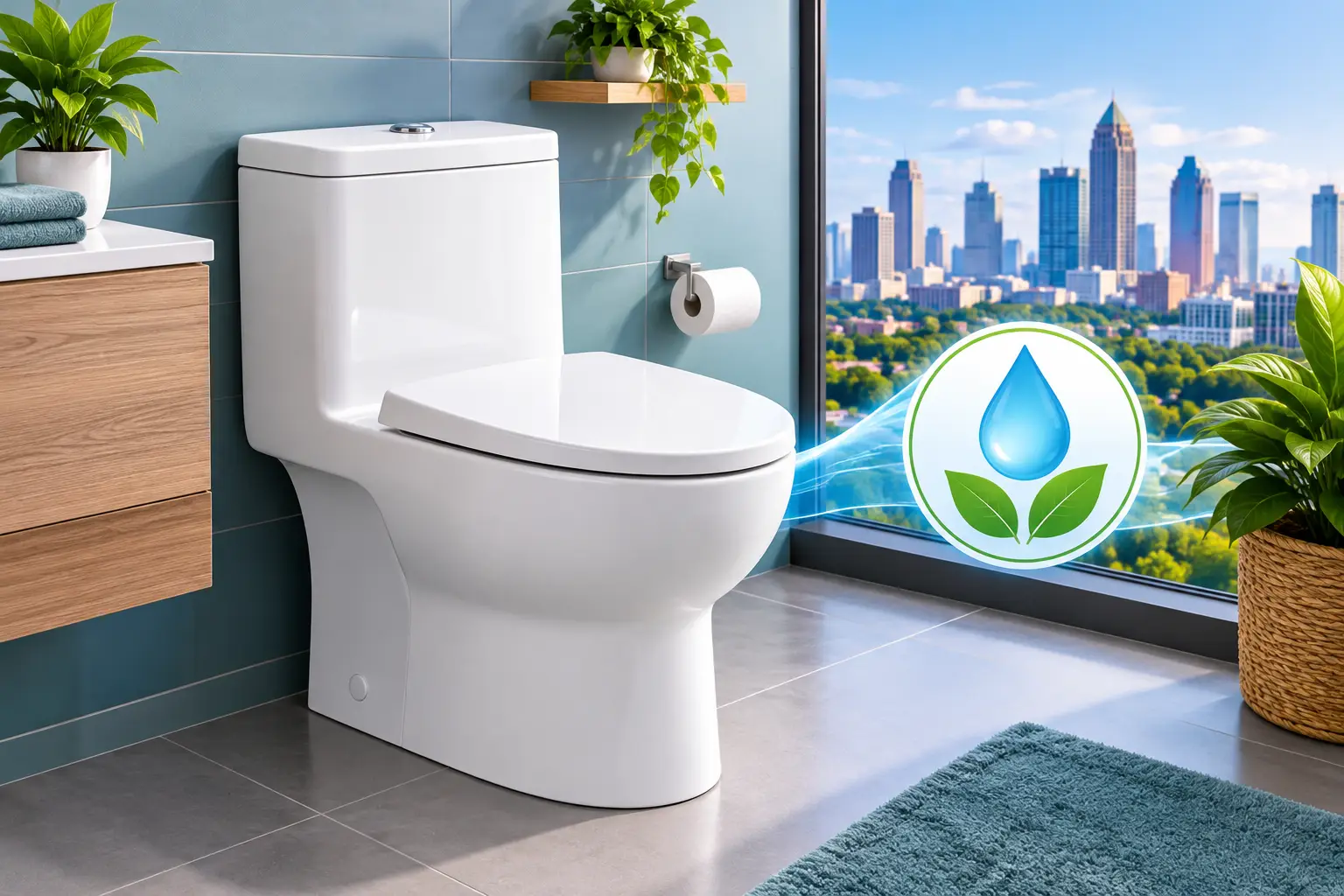
High Efficiency Toilet Review for Metro Atlanta Homes
A toilet can look perfectly fine and still waste thousands of gallons a year, clog too often, or leave you reaching for the handle twice. That is why a good high efficiency toilet review should look beyond the water-use label. For Metro Atlanta homeowners, the right choice comes down to flushing performance, bathroom layout, comfort, and whether the existing plumbing can support an easy installation.
High-efficiency toilets are a smart upgrade when an older fixture is leaking, constantly running, cracking, or simply using too much water. But not every water-saving toilet performs the same way. A lower flush volume is helpful only when the toilet clears the bowl reliably.
High Efficiency Toilet Review: What Matters Most
A high-efficiency toilet, often called an HET, uses 1.28 gallons per flush or less. Older toilets may use 3.5 gallons per flush, while many toilets installed before 1994 use as much as 5 to 7 gallons. On a busy household bathroom, that difference adds up quickly.
The good news is that modern high-efficiency models are not the weak-flushing toilets some homeowners remember from years ago. Bowl design, trapway size, siphon action, pressure-assist systems, and rim jets have all improved. Still, there is a real difference between a toilet that saves water on paper and one that handles daily family use without repeat flushing or frequent clogs.
When we look at toilet performance for local homes, we focus on four practical questions: Does it flush dependably? Does it fit the space and existing drain location? Is it comfortable for the people using it? Can it be serviced without unnecessary trouble down the road?
Water Savings Are Real, but So Is Flush Performance
A 1.28-gallon toilet can reduce water use substantially compared with an older fixture. That is especially worthwhile in homes with several bathrooms, rental properties, or households with children. Less water per flush can mean lower water bills over time, and it is a responsible upgrade when an old toilet is ready to go.
But homeowners should not choose based on gallons alone. A poorly designed toilet may require a second flush, which cuts into the savings and creates frustration every day. Look for a model with a strong independent flush-performance rating, a fully glazed trapway, and a bowl wash system that reaches the areas most likely to collect residue.
Gravity-flush toilets are the most common choice. They are familiar, generally quieter, and usually straightforward to repair because replacement parts are widely available. For most Decatur-area homes, a quality gravity model is the practical sweet spot.
Pressure-assist toilets use compressed air inside a tank to create a more forceful flush. They can be a good fit for a bathroom that sees heavy use or has a history of difficult clogs. The trade-off is noise. They also have more specialized internal components, so repairs can cost more than those for a standard gravity toilet.
Bowl Shape and Height Change Everyday Comfort
Toilet shopping gets very practical once you measure the bathroom. Round-front bowls take up less room and can work well in smaller powder rooms. Elongated bowls extend farther from the wall but offer more sitting room, which many adults prefer. In a tight hall bath, that extra length can make a big difference in how comfortably the door opens and how easily people move through the room.
Height deserves just as much attention. Standard-height toilets are closer to the height many people grew up with. Chair-height or comfort-height models are a few inches taller and can be easier for taller adults, older homeowners, and anyone with knee or mobility concerns.
There is no one height that works for every household. A taller toilet can be more comfortable for some adults but less convenient for small children or shorter users. If the bathroom serves people with different needs, test the sitting height in person before committing to a fixture.
One-Piece vs. Two-Piece Toilets
Two-piece toilets have a separate tank and bowl. They remain popular because they offer plenty of choices, are often less expensive up front, and can be easier to carry into a home in two parts. Parts are common, and future repairs tend to be familiar to most plumbers.
One-piece toilets have a cleaner, more modern appearance because the tank and bowl are molded together. They are easier to wipe down around the base of the tank, which is a real advantage for homeowners who want less cleaning. They can cost more and are heavier to handle during installation.
Neither style automatically flushes better. That comes down to the particular model and its internal design. Choose the style you like, then check the performance details rather than assuming a one-piece toilet is always the better toilet.
Do Not Skip the Rough-In Measurement
Before buying any toilet, measure the rough-in. This is the distance from the finished wall behind the toilet to the center of the floor drain bolt caps. In many homes, the standard measurement is 12 inches. Older homes may have a 10-inch or 14-inch rough-in, and choosing the wrong size can turn a simple replacement into a headache.
Measure from the finished wall, not the baseboard. If there is tile, paneling, or a thick wall treatment behind the tank, account for it. Also check the location of the water supply valve, nearby cabinets, door swing, and any clearance needed for a grab bar or accessibility improvement.
A toilet can technically fit the drain and still feel cramped in the room. This is one reason a quick professional look before installation can save time and return trips to the store.
Features Worth Paying For
Some upgrades genuinely improve daily use. A larger trapway can help reduce clogging. A slow-close seat prevents the loud slam that eventually loosens hinges and irritates everyone in the house. A skirted base has fewer curves around the bottom, making it much easier to clean.
Dual-flush toilets offer separate flush options for liquid and solid waste. They can save additional water, particularly in a lightly used guest bath. On the other hand, the buttons and flush valve assembly add another system that may need attention later. A standard 1.28-gallon single-flush toilet is often simpler and plenty efficient for a main household bathroom.
Touchless flush systems are convenient and can reduce contact with the handle, but they usually rely on batteries or electronic components. They are a nice feature when properly installed, not a must-have for every home. If easy future maintenance is the priority, a simple mechanical flush lever is hard to beat.
Installation Can Reveal Problems You Cannot See
Replacing a toilet may seem like a straightforward job, but the old fixture can hide trouble at the floor flange, shutoff valve, supply line, or subfloor. A toilet that rocks even slightly can damage the wax seal and lead to a slow leak around the base. Left alone, that moisture can harm flooring and the wood beneath it.
A proper installation includes inspecting the flange, securing the toilet without overtightening the porcelain, leveling it correctly, using the right seal for the situation, connecting a reliable supply line, and testing several flushes. Caulk around the base is often recommended, but it should be applied in a way that does not trap an unnoticed leak underneath.
If your current toilet has been leaking at the base, rocking, backing up, or clogging more than usual, do not assume a new toilet alone will solve the problem. The issue may involve the drain line, venting, flange height, or a partial blockage farther down the pipe.
Our Straight Answer for Local Homeowners
For most households, the best high-efficiency toilet is a dependable 1.28-gallon gravity model with a strong flush rating, an elongated bowl if space allows, and a height that suits the people using the bathroom. Avoid paying extra for features you will not use, but do not buy the cheapest fixture if replacement parts are hard to find or flush performance is questionable.
If you are replacing a toilet in Decatur, Lithonia, Conyers, or nearby Metro Atlanta communities, TPD Atlanta can help you sort through the practical choices and install the right fixture without turning a simple bathroom project into a sales pitch. Sometimes a small repair is all you need. Other times, an efficient new toilet is the better long-term answer.
The best toilet is not the fanciest one on the showroom floor. It is the one that fits your bathroom, flushes cleanly, uses water wisely, and lets your household get on with the day without thinking about plumbing.


Comments