
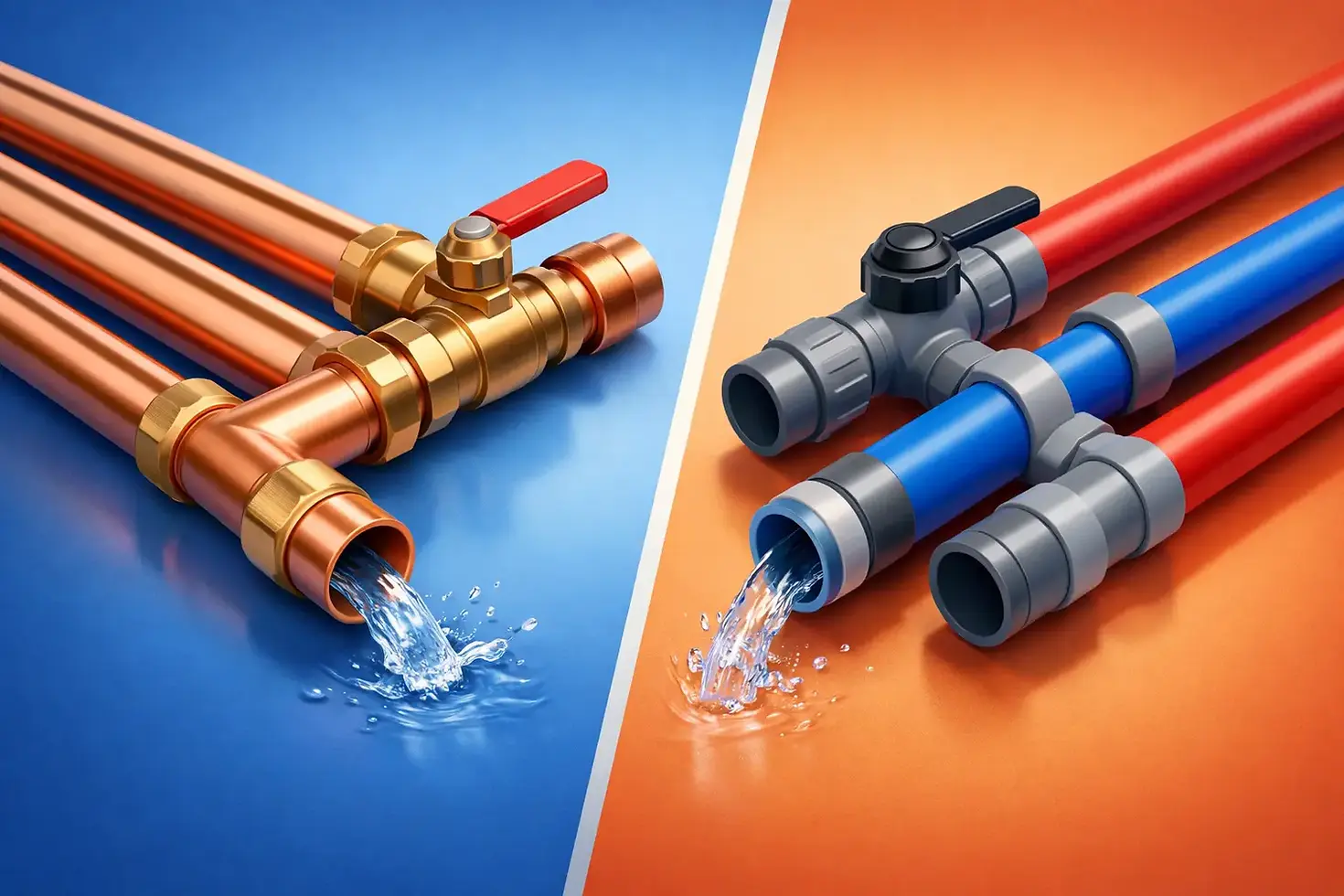
Copper Versus PEX Water Lines
If you are replacing old plumbing or dealing with a leak behind a wall, the question usually gets practical fast: copper versus PEX water lines - which one makes more sense for your home, your budget, and your long-term plans? Homeowners around Decatur and Metro Atlanta ask this a lot, especially when they want an honest answer instead of a sales pitch. The truth is, both materials can be good choices. The better option depends on the age of the house, the condition of the existing pipes, your water quality, and how much access there is for the work.
Copper versus PEX water lines: what is the real difference?
Copper has been used in homes for decades. It is a rigid metal pipe that has a long track record and a reputation for durability. PEX is a flexible plastic tubing that has become very common in residential plumbing because it is easier to install and often more affordable.
From a homeowner's point of view, the biggest differences usually come down to price, installation method, repair strategy, and how the system will perform over time. Copper feels traditional and proven. PEX feels modern and practical. Neither one is automatically better in every house.
Why many homeowners lean toward PEX
PEX has become popular for a reason. It is flexible, which means a plumber can often route it through walls and ceilings with fewer cuts and fewer connections. That matters because every extra connection is one more potential leak point.
PEX is also usually less expensive to install than copper. The material itself often costs less, and the labor can be lower because the installation tends to move faster. If a home needs a full or partial repipe, that difference can be significant.
There is also the noise factor. PEX tends to be quieter than copper when water moves through the lines. If you have ever heard pipes rattling or knocking in the wall, that alone can make PEX appealing.
For many repipes in occupied homes, PEX is simply less disruptive. Since it bends around obstacles, it can reduce the amount of wall opening needed to complete the job. That is a practical benefit homeowners appreciate right away.
Where copper still has a strong case
Copper still earns its place, and not just because it has been around a long time. It handles heat very well, has a solid track record, and many homeowners feel more comfortable with a metal water line than a plastic one.
In some situations, copper is a very good match for the home that already has copper lines and only needs a limited repair or a targeted section replaced. If the existing system is in good shape overall, it may make more sense to stay consistent rather than switch materials in one small area.
Copper is also more resistant to damage from UV light, which matters if any piping is installed in areas with direct sun exposure. PEX should not be left exposed to sunlight for extended periods.
Some people also prefer copper because it has that old-school reputation for being tough and permanent. That is not just nostalgia. Properly installed copper can last a very long time.
Cost matters, and this is where PEX usually wins
For most homeowners, budget is part of the conversation whether they say it out loud or not. On cost alone, PEX usually comes out ahead. The material is generally cheaper, and the labor is often less intensive.
That does not mean copper is a bad investment. It means copper often costs more up front. If you are already facing a water heater replacement, slab leak repair, or major plumbing work, that higher initial price can push the project beyond what feels reasonable.
In many Metro Atlanta homes, especially older homes needing updates, PEX gives people a way to solve the plumbing problem without turning it into a much bigger bill than expected. If someone wants the most budget-friendly route that still performs well, PEX is often the first option discussed.
Durability is not one-size-fits-all
This is where the answer gets more honest and a little less simple. Both copper and PEX can last a long time, but both can also fail under the wrong conditions.
Copper can develop pinhole leaks over time. Water chemistry plays a role, and so does the quality of the installation. If the water is aggressive or the pipe has been worn down by years of use, copper may not age as gracefully as people expect.
PEX resists corrosion, which is a major plus. It does not get pinhole leaks from the same kind of internal corrosion issues copper can face. But PEX can be vulnerable to physical damage if it is exposed in the wrong place, and it needs to be installed correctly with the right fittings and support.
So when people ask which lasts longer, the fair answer is that it depends. A well-installed PEX system in the right home can perform very well for years. A well-installed copper system can too. The home, the water, and the installation quality all matter.
Water quality and taste concerns
Some homeowners are concerned about how piping affects drinking water. Copper has the advantage of familiarity. People know what it is, and many trust it more because it is metal.
PEX has come a long way and is widely used, but some homeowners still prefer copper for peace of mind. That is a personal comfort issue as much as a plumbing issue. In most cases, both materials are accepted for residential water supply use when installed properly and in compliance with code.
If a homeowner is especially sensitive to questions about water taste or material preference, that should be part of the discussion. Plumbing decisions are not only about what works on paper. They are also about what helps you feel comfortable in your own home.
Repairability and future access
Choosing between copper versus PEX water lines for repairs
If the immediate problem is a single leak, the best choice may not be the same as it would be for a whole-house repipe. A spot repair in copper may be perfectly reasonable if the rest of the system is in good condition. On the other hand, if one leak is part of a bigger pattern, continuing to patch copper lines can become more expensive than moving toward a broader replacement plan.
PEX is often easier to work with in tight spaces and remodeling situations. That can make future repairs and modifications simpler. If a bathroom renovation or kitchen update is on the horizon, PEX may provide more flexibility.
This is one of those moments where an honest plumber should slow down and explain the options. Not every leak means you need to repipe the entire house. But not every cheap repair is actually the smart long-term move either.
What makes sense in older Metro Atlanta homes?
In this area, many homes have a mix of plumbing history. You may find older galvanized lines, sections of copper added later, and repairs done over the years with whatever made sense at the time. That history affects the answer.
If the home has aging copper with multiple leaks, low water pressure, or visible corrosion, a repipe with PEX may be the more practical solution. It can update the system without driving labor costs through the roof.
If the house has a mostly sound copper system and only one isolated issue, staying with copper may be completely reasonable. There is no prize for replacing more than you need.
The right call comes from looking at the actual plumbing, not just choosing a side in a general debate.
So which one should you choose?
If you want the simplest broad answer, PEX is often the better value for full repipes and larger residential plumbing updates. It is cost-effective, versatile, and usually less invasive to install. That makes it a strong fit for many homeowners who want a reliable fix without paying for more complexity than they need.
Copper still makes sense when durability, material preference, sun exposure, or matching an existing system are bigger factors. It can also be a solid choice for certain repairs where replacing a section is more practical than changing direction entirely.
A good plumber should walk you through those trade-offs clearly. No pressure. No scare tactics. Just a straight answer about what fits your home best.
When you are weighing plumbing options, the goal is not to win an argument about materials. The goal is to end up with water lines you can trust when you turn on the tap tomorrow, next month, and years from now.


Comments