
How to Spot a Silent Toilet Leak Before It Costs You
A toilet can waste a surprising amount of water without making a sound, leaving a puddle, or giving you any obvious warning. Knowing how to spot a silent toilet leak can help you catch a small, inexpensive repair before it turns into a higher water bill or a toilet that will not stop running when you need it most.
For homeowners in Decatur and across Metro Atlanta, this is one of the easiest plumbing problems to miss. The toilet may look perfectly normal from the outside, but water can be slowly slipping from the tank into the bowl all day and all night. The good news is that you can usually check for it yourself in just a few minutes.
What Is a Silent Toilet Leak?
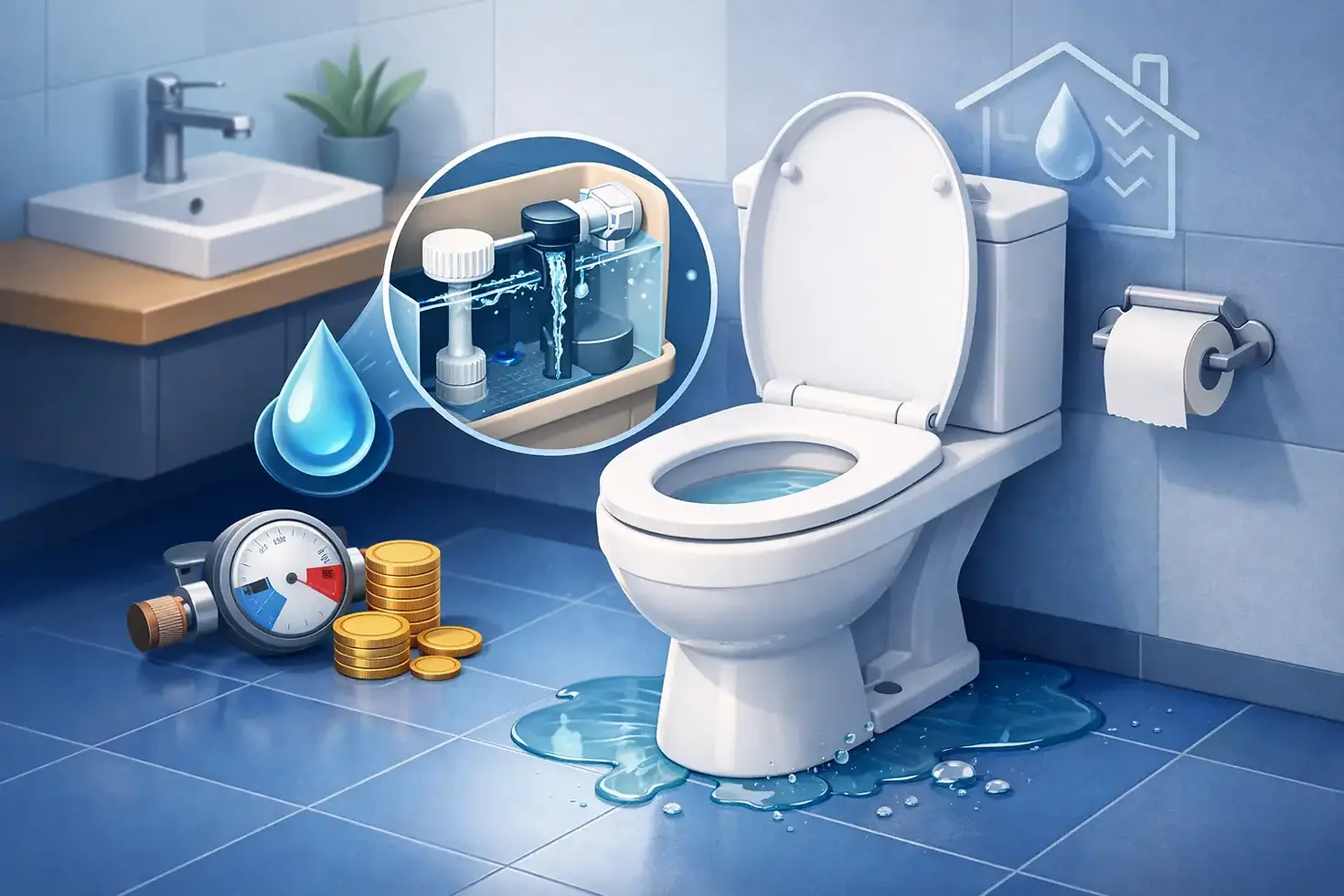
A silent toilet leak happens when water escapes from the tank into the bowl without flushing. In most cases, the rubber flapper at the bottom of the tank is worn, warped, dirty, or no longer sealing tightly. The fill valve senses the lower water level and quietly adds more water to the tank.
Because that refill can be gradual, you may never hear the toilet run. Meanwhile, your water meter keeps moving. Depending on how severe the leak is, it can waste hundreds of gallons over time.
A bad flapper is common, but it is not the only possible cause. A cracked overflow tube, an improperly adjusted fill valve, mineral buildup, or a loose flush valve assembly can also allow water to move where it should not. That is why a quick test is useful, but it is also worth paying attention to what the test tells you.
How to Spot a Silent Toilet Leak With a Dye Test
The dye test is the simplest and most reliable place to start. You will need food coloring or a dye tablet made for toilet leak testing. Avoid using anything that could stain the porcelain permanently.
First, make sure no one uses that toilet for at least 15 to 20 minutes. Remove the tank lid carefully and set it on a towel or stable surface. Tank lids can crack more easily than people expect.
Add several drops of dark food coloring to the water in the tank. Do not flush. Then wait.
When you return, look at the water in the toilet bowl. If the colored water has appeared in the bowl, water is leaking from the tank through the flush valve area. That usually points to the flapper or the seal beneath it.
If the bowl water stays clear after 20 minutes, the toilet may be fine. Still, if you have noticed unexplained water use or the tank occasionally refills on its own, repeat the test later or leave the dye in for a little longer. A very slow leak may take more time to show up.
Signs You May Have a Leak Before You Test
The dye test gives you a clear answer, but your toilet may offer clues beforehand. A toilet that briefly refills by itself when no one has flushed it is a classic warning sign. You may hear a short hiss, a faint trickle, or the sound of the tank filling for a few seconds in the middle of the night.
Another clue is movement in your water meter. Turn off faucets, dishwashers, washing machines, ice makers, and anything else that uses water. Then check the small leak indicator on your meter, if it has one. If it continues moving after everything is off, water is going somewhere.
That does not automatically mean the toilet is the problem. Underground water main leaks, dripping fixtures, irrigation systems, and other plumbing issues can also affect the meter. But toilets are a smart first place to check because they are common sources of hidden water waste and are often straightforward to repair.
You may also notice that the toilet handle feels loose, the flush seems weak, or the tank water level sits unusually high. These symptoms do not always mean there is a silent leak, but they are worth investigating before they become a bigger inconvenience.
Check Inside the Tank
After a positive dye test, take a closer look inside the tank. You do not need to take the toilet apart right away. Start by flushing once and watching how the parts move.
The flapper should lift cleanly when you flush and settle flat over the drain opening as the tank empties. If it looks crooked, stiff, coated with mineral deposits, or cracked around the edges, it may not be sealing. In many homes, replacing the flapper solves the problem.
Also look at the chain connecting the handle lever to the flapper. A chain that is too short can hold the flapper slightly open. One that is too long can get caught beneath the flapper and prevent a tight seal. Ideally, the chain has a small amount of slack when the flapper is closed.
Next, check the overflow tube. This is the vertical tube near the center of the tank. If water is continually spilling into that tube, the fill valve may be set too high or may be failing. The water level should generally sit below the top of the overflow tube, often near the marked fill line inside the tank.
A toilet with an older-style float ball or a newer cup-style fill valve may need a simple adjustment. But if the valve does not shut off consistently, replacement is usually the more dependable fix.
Do Not Ignore Water Around the Toilet Base
A silent tank-to-bowl leak is different from a leak at the floor, and the distinction matters. If you find water around the base of the toilet, damp flooring, loose tile, or a lingering sewer-like odor, do not assume it is just condensation or a bad flapper.
Water at the base can point to a failed wax ring, a loose toilet, a cracked bowl, or a problem with the drain connection. That kind of leak can damage the subfloor beneath the toilet even if the bathroom floor looks mostly dry.
Try gently rocking the toilet from side to side. It should feel stable. If it moves, stop using it until it can be checked. Tightening bolts without addressing the cause can crack the porcelain or make a hidden problem worse.
When a Simple Repair Makes Sense - and When to Call
Replacing a flapper can be a reasonable do-it-yourself job if you are comfortable turning off the water supply and following the instructions for your toilet model. Take the old flapper with you when buying a replacement if possible. Toilet parts are not one-size-fits-all, and a nearly correct flapper can still leak.
It is time to call a plumber if you replace the flapper and the dye test still shows color in the bowl, if the tank continues filling, or if you see corrosion, cracked parts, or water around the base. A toilet may have more than one issue, especially if it is older or has been repaired several times over the years.
There is also a practical point: a repair that looks small can become frustrating when the shutoff valve will not turn, the tank bolts are rusted in place, or the toilet needs to be removed for a proper diagnosis. A local master plumber can identify whether you need a minor part, a fill valve adjustment, a new flush valve, or a toilet replacement - without guessing or pushing work you do not need.
Make the Check Part of Your Home Routine
Test every toilet in the house once or twice a year, and test sooner if your water bill jumps without a clear reason. Rental homes, guest bathrooms, and rarely used toilets deserve extra attention because a leak can continue for weeks before anyone notices it.
A few drops of food coloring and a quiet 20-minute check can save water, money, and a lot of second-guessing. If the result is not clear or your toilet is still acting up, a friendly local plumber can help you get a straight answer and a practical fix.


Comments